

A Leaf Too Far: The legal risks of “Buy Canadian” marketing – and how to stay on the right side of the line
Trade tensions with Canada’s closest neighbour have sparked something unexpected: a surge of economic patriotism. Canadians are shopping with their values, reaching past foreign brands to “buy Canadian,” but that groundswell has exposed a darker side: not every maple leaf on a label tells a true story.
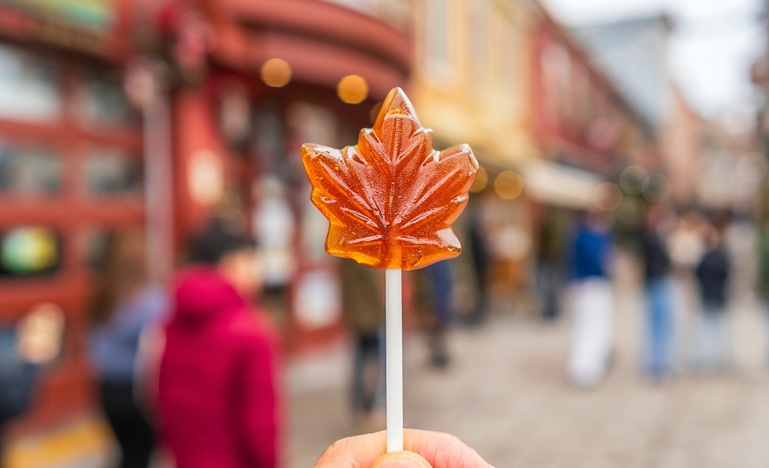
Trade tensions with Canada’s closest neighbour have sparked something unexpected: a surge of economic patriotism. Canadians are shopping with their values, reaching past foreign brands to “buy Canadian,” but that groundswell has exposed a darker side: not every maple leaf on a label tells a true story. For lawyers advising on these maple-flavoured matters, it’s essential to understand the legal risks of making false or misleading country of origin claims and the best practices businesses should follow when marketing goods as Canadian.
The Rise of Maple-Washing
As uncertainties persist regarding the future of the relationship between Canada and the US, many businesses in Canada have pivoted to align themselves, their brands and their products with Canadian identity and values.
Walk the aisles of any grocery store or scroll through any retailer’s website today and you will notice that maple leaves, red-and-white colour schemes, and “homegrown” messaging are everywhere. In this context, the terms “maple-washing” and “maple glazing” have come to prominence, both generally referring to the creation of an association between a company, brand or product and Canada. But when such an association is false or misleading, these claims can run a business straight into legal jeopardy.
Maple-Washing and the Competition Act
The Competition Bureau is an independent law enforcement agency that aims to protect and promote competitive markets and enable informed consumer choice. The Bureau is responsible for the administration and enforcement of four federal statutes: the Competition Act, the Consumer Packaging and Labelling Act (which only applies to non-food products), the Textile Labelling Act (which requires that consumer textile articles bear accurate and meaningful labelling information), and the Precious Metals Marking Act.
None of the Competition Act, the Consumer Packaging and Labelling Act, nor the Textile Labelling Act require the identification of the country of origin of a product. However, all three Acts prohibit the making of false or misleading representations. The choice to make a Canadian-origin claim is voluntary – but once made, it must be truthful.
Most cases regarding deceptive marketing claims are pursued under the Competition Act’s civil provisions. Section 74.01(1)(a) provides that anyone who makes a materially false or misleading representation to the public to promote the supply or use of a product or a business interest engages in “reviewable conduct.” Contravention of this provision may result in orders to cease such conduct, to publish a corrective notice, to pay an administrative monetary penalty (AMP) and/or to pay monetary restitution to be distributed among the persons to whom the products were sold.
For corporations, the maximum AMP is the greater of (1) $10 million ($15 million for subsequent contraventions), and (2) three times the value of the benefit derived from the deceptive conduct, or, if that cannot be reasonably determined, 3 per cent of the corporation’s annual worldwide gross revenues.
The Bureau encourages those making Canada-centric country of origin claims with respect to non-food products to refer to the guidance set out in the Bureau’s guidelines, “‘Product of Canada’ and ‘Made in Canada’ Claims”. These guidelines primarily discuss the Bureau’s interpretation of two country of origin claims: “Product of Canada” and “Made in Canada.”
The thresholds matter:
- Where a “Product of Canada” claim is made, the Bureau will generally not challenge the claim if:
- the last substantial transformation of the good occurred in Canada; and
- all or at least 98 per cent of the total direct costs of producing or manufacturing the good were incurred in Canada.
- If a “Made in Canada” claim is made, the Bureau will generally not challenge the claim if:
- the last substantial transformation of the good occurred in Canada;
- at least 51 per cent of the total direct costs of producing or manufacturing the good were incurred in Canada; and
- the claim is accompanied by an appropriate qualifying statement such as “Made in Canada with imported parts” or “Made in Canada with domestic and imported parts.”
The Moose Knuckles case illustrates the consequences. In 2016, the Bureau alleged that Moose Knuckles, a Canadian-based manufacturer of premium winter jackets, engaged in deceptive marketing practices when it advertised and labelled its parkas as “Made in Canada.”[1]
The parkas were largely manufactured in Asia with only finishings like zippers, snaps, trimmings and labels added in Canada. The matter was resolved pursuant to a Consent Agreement which required Moose Knuckles to clarify that certain of its parkas were made with Canadian and imported components, pay a $750,000 administrative monetary penalty over five years via donations to Canadian charities, and implement an internal compliance program.[2]
The enforcement landscape has since shifted significantly. As of June 2025, private parties, with leave of the Competition Tribunal, are able to bring claims for breach of, among other things, the general prohibition against false or misleading representations.[3] This change, introduced through Bill C-59 amendments to the Competition Act, means that businesses can now be sued not only by regulators, but by competitors, advocacy groups and consumers alike. Indeed, class actions were not long in coming.
In September 2025, an application to authorize a class action was filed in Québec against grocers including Loblaws Inc. (a.d.b.a. Provigo and Maxi), Sobeys Capital Incorporated (d.b.a. IGA and Marché Bonichoix), Metro Inc. (a.d.b.a. Super C), Giant Tiger Stores Limited and Wal-Mart Canada Corp., alleging that those chains engaged in illegal maple-washing and that these alleged misrepresentations and omissions constitute prohibited business practices within the meaning of the Consumer Protection Act (Québec), the Civil Code of Québec and the Competition Act. As of November 2026, the class action has not yet been authorized.[4]
Maple-Washing Under the Food and Drugs Act and the Safe Food for Canadians Act
As noted above, the Bureau’s Guidelines do not apply to food products. Where a business includes statements identifying Canada as the country of origin on a food product, the Canadian Food Inspection Agency’s (CFIA) “Guidelines for ‘Product of Canada’ and ‘Made in Canada’ Claims on Food Labels” become relevant.
For a food product to be labelled “Product of Canada”, all or virtually all major ingredients, processing, and labour used to make the food product must be Canadian. The use of imported agricultural inputs such as seeds or fertilizers or imported packaging materials do not disqualify the food product from making a “Product of Canada” claim. The presence of low levels of ingredients that are generally not produced or grown in Canada, generally, less than 2 per cent of the product, also would not disqualify a food from making a “Product of Canada” claim.
Notably, to make a “Made in Canada” claim, the CFIA Guidelines do not expressly require that at least 51 per cent of the total direct production or manufacturing costs be incurred in Canada, a distinction from the Bureau’s Guidelines for non-food products. However, the CFIA Guidelines do provide guidance regarding accompanying qualifying statements and the last substantial transformation of the product.
Where the last substantial transformation of the product occurred in Canada, a “Made in Canada” claim with a qualifying statement may be used. For example, a substantial transformation that processes cheese, dough, sauce, and other ingredients into a pizza occurring in Canada would qualify the pizza to be labelled as “Made in Canada”. An accompanying qualifying statement must be used, such as “Made in Canada from domestic and imported ingredients” or “Made in Canada from imported ingredients”, as applicable, if some or all of the ingredients are imported.
In March 2025, the CFIA issued a Notice to industry reminding food industry participants of the legislative prohibitions against false or misleading food origin claims.[5] The Notice recommended that where the maple leaf is used on packaging, retail shelves, or online, an accompanying domestic content statement, such as “Product of Canada” or “Made in Canada”, as applicable, be placed in close proximity to the maple leaf to clarify its meaning and help avoid misleading consumers.
The CFIA has followed its warnings with action. In 2026, the CFIA announced that it had issued $47,000 in fines for inaccurate or misleading country of origin claims, with the penalties ranging from $7,000 to $10,000.[6] The CFIA has also reported an increasing trend in complaints for false or misleading labelling since the “Buy Canadian” movement gained traction.[7]
Best Practices
What should a business do? When a business decides to make a Canada-origin claim in its marketing or advertising, it should exercise diligence by consulting the CFIA Guidelines for food products or the Bureau’s Guidelines for non-food products to assess compliance of its “Made in Canada” or similar claims. Although they do not bear the force of law, the CFIA Guidelines and the Bureau's Guidelines offer insight into how each regulator interprets Canada-origin claims under the statutes and guidance it enforces or oversees. Accordingly, for businesses making their own Canada-origin claims, compliance with the applicable Guidelines reduces the risk of regulatory challenge and can support a business's defence against allegations of misleading representations.
Misleading Canada-origin claims may lead to regulatory enforcement, monetary penalties and reputational harm. The ability for private parties to bring claims to the Competition Tribunal for false or misleading representations further heightens the level of risk faced by businesses, as does the specter of civil liability, in the form of individual or class action lawsuits, from consumers alleging that they were misled by claims that products are made in Canada. The CFIA has also signalled that misleading or missing country of origin claims in advertising is an increasingly frequent concern amongst consumers.
In practical terms, businesses should:
- Audit all existing labels, packaging and marketing materials against the applicable regulatory thresholds before making or continuing any Canadian-origin claim;
- Document the cost breakdown of production or manufacturing to demonstrate that the applicable Canadian-content threshold (98 per cent for "Product of Canada"; 51 per cent for "Made in Canada" in the non-food context) is met;
- Include qualifying statements wherever required – their absence alone can be enough to attract regulatory or private scrutiny;
- Exercise caution with national symbols – a maple leaf or red-and-white colour scheme can imply a Canadian-origin claim even without the words "Made in Canada"; and
- Monitor the evolving regulatory and litigation landscape, including future Competition Tribunal decisions arising from private access applications.
The drive to “buy Canadian” is only intensifying as trade tensions continue. Businesses must remain vigilant to the specific labelling requirements to avoid misleading customers as the regulatory regimes around Canadian products evolve. The maple leaf is a powerful symbol, but businesses that borrow its credibility without earning it do so at increasing legal and reputational peril.
[1] Bureau takes action against Moose Knuckles for alleged false or misleading 'Made in Canada' claims - Canada.ca.
[2] Competition Bureau resolves Made in Canada advertising concerns with Moose Knuckles - Canada.ca.
[3] See Competition Act, s 103.1(1). The Competition Bureau issued a bulletin on private access to the Competition Tribunal on August 4, 2026 outlining how the Bureau views its role in private access applications.
[5] Notice to industry – The importance of accurate use of Product of Canada, Made in Canada and other origin claims - inspection.canada.ca.
[7] Canadian Food Inspection Agency, Food Fraud Annual Report 2024 to 2025, p 5.